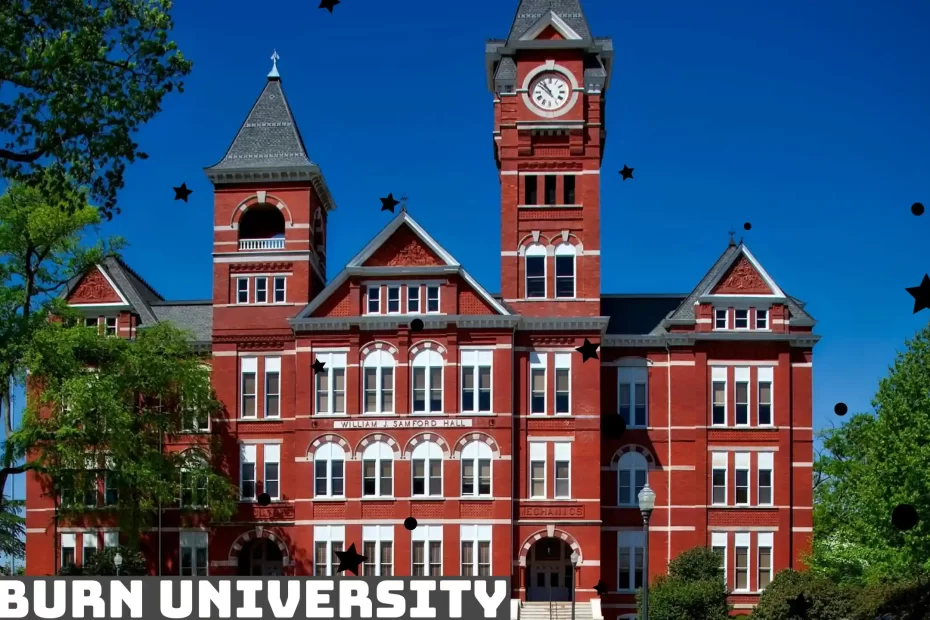
Auburn University in 2025: Where Southern Charm Fuels Global Innovation
Auburn University in 2025
On the sun-drenched plains of Alabama, a unique synthesis is taking place. It is a fusion of two identities that rarely coexist: the warmth of a close-knit community and the intensity of a world-class research engine. This is Auburn University, a place consistently ranked number one in the nation for the happiest students, and simultaneously, a formidable R1 research institution at the very heart of America’s defense, technology, and innovation sectors.[1, 2]
Many institutions strive for a balance between student life and academic rigor; Auburn demonstrates that these are not opposing forces to be balanced, but symbiotic elements that fuel one another. The university’s celebrated culture—the “Auburn Family”—is not merely a source of comfort and belonging; it is the very engine that powers its high-stakes innovation. It is this unique environment that cultivates graduates who are not only successful but also grounded, ethical, and profoundly committed to service.
This is the story of how a university’s belief in community creates a foundation for global leadership. It is a journey that stretches from the supportive classrooms on campus to the frontiers of space, from the digital battlegrounds of cybersecurity to the philosophical debates surrounding artificial intelligence. It is a narrative of tangible, real-world impact, visible in the dignified homes built by its architecture students for Alabama’s most vulnerable residents, in the life-saving gene therapies emerging from its veterinary labs, and in the thriving startups launched from its business incubators.[3, 4, 5] In 2025, Auburn University stands as a testament to a powerful idea: that the strongest foundation for shaping the future is a spirit that is not afraid, nurtured within a family that always has your back.
The Auburn Experience: A Foundation of Excellence and a Family for Life
The distinction of having the “happiest students” in the nation, an honor bestowed by The Princeton Review for both 2020 and 2025, is more than a feel-good headline for Auburn University; it is a key performance indicator of a deliberately cultivated ecosystem.[1, 6] This happiness is not an abstract feeling but the tangible result of an environment where students feel supported, connected, and empowered to succeed.
As senior public relations major Sara Lipe articulated, there’s a campus saying that rings true for many: “If you love Auburn, Auburn will love you back”.[1] This sentiment goes beyond school spirit; it speaks to a culture where, as Lipe notes, “every individual can feel seen, valued and deeply connected”.[1]
Personalized Learning
Avg. Starting Salary
$81,400
(Engineering Graduates)
This profound sense of belonging is built upon a structural foundation designed for personal interaction and mentorship. With a student-to-faculty ratio of 20:1 and with 84% of undergraduate classes having fewer than 50 students, Auburn ensures that learning is a collaborative and personal experience, not an anonymous one.[7] This supportive atmosphere, where classmates become a “second family,” creates a powerful network that makes challenging coursework more manageable and academic success more attainable.[9]
The data validates this connection. Auburn boasts a record-high first-year student retention rate of 95% and an impressive 82% six-year graduation rate, far exceeding the national average.[10] These metrics are the direct outcome of a university that is “firmly committed to an exceptional student experience” where “all students can thrive”.[1]
Ultimately, this value is demonstrated in the success of its graduates. For the Samuel Ginn College of Engineering, a staggering 90% of students who complete an internship or co-op achieve positive career outcomes within six months.[11] This demand is reflected in strong starting salaries, with 2023-2024 mean salaries reaching $75,853 for mechanical engineering and $74,607 for aerospace engineering.[13, 14] The “Auburn Family” is not just a cultural slogan; it is a strategic asset that provides a powerful return on investment.
Auburn Graduate Success Snapshot
| College/Program Area | Average Starting Salary (2023-2024) | Career Outcome Rate (within 6 mos.) | Top Recruiting Companies |
|---|---|---|---|
| Samuel Ginn College of Engineering | $71,000 – $101,000+ | ~90% (with co-op/internship) | Amazon, Boeing, ExxonMobil, Southern Company [11, 15] |
| Harbert College of Business | ~$60,000 | >80% | EY, Truist, Major Financial Firms [12, 16] |
| University-Wide (Class of 2023) | $59,608 | 84.7% (Overall Success Rate) | Diverse industries across the nation [12] |
From the Plains to the Final Frontier: Powering America’s Future
Auburn University’s impact extends far beyond the individual success of its graduates, reaching into the highest echelons of national security and space exploration. This evolution is rooted in Auburn’s unique identity as one of the nation’s few land-, sea-, and space-grant institutions, a triple designation that mandates a commitment to serving the nation through research and innovation across all domains.[2]
The story of Auburn’s ascent in aerospace began with AubieSat-1, the first student-built satellite in Alabama accepted by NASA for launch.[17, 18, 19] This foundational success paved the way for more ambitious projects and culminated in a pivotal moment: a landmark $11.4 million DoD contract to establish a cutting-edge radiation-hardening facility to test microelectronics for space.[22] As Steve Taylor, Auburn’s senior vice president for research, stated, this capability is “crucial to the future of national defense”.[22] This trajectory—from a student satellite pinging “War Eagle” to a multi-million-dollar national defense contract—is the outcome of a decade-long investment in hands-on student experience.
The Digital Vanguard: Leading in Cybersecurity and Building Ethical AI
As the world becomes increasingly digitized, Auburn has positioned itself as a national nerve center for the digital future. Its leadership extends beyond physical hardware and into the critical, intangible realms of cyber defense and the responsible development of artificial intelligence.
America’s Cyber-Defense Hub
Auburn’s prowess in cybersecurity is recognized at the highest levels. It is one of only 11 institutions in the nation to hold all three prestigious Center of Academic Excellence (CAE) designations from the National Security Agency (NSA).[2, 23] This expertise is actively deployed to protect the nation’s most vital systems. With a $10 million grant from the Department of Energy (DOE), Auburn established the Southeast Region Cybersecurity Collaboration Center (SERC3) to protect the U.S. power grid.[25, 26, 27] Recognizing the link between AI and cybersecurity, the university has also launched the Auburn University Center for Artificial Intelligence and Cybersecurity Engineering (AU-CAICE), positioning it at the vanguard of digital defense for the next generation.[29, 30]
Engineering AI with a Conscience
While building robust defenses, Auburn is simultaneously pioneering the application and ethical governance of AI. In agriculture, researchers use AI-powered drones for “precision agriculture,” reducing chemical use and improving yields.[31, 33, 34] In pharmacy, generative AI creates realistic simulations for students to hone patient communication skills.[32] Perhaps most significantly, Auburn has emerged as a national leader in AI pedagogy, creating a “Teaching With AI” course adopted by universities nationwide.[31] This is anchored by robust philosophical inquiry from professors like Elay Shech and Rachel Rudolph, who explore how societal biases are “baked into” AI models and the risks of “black box” systems we don’t fully understand.[35, 36]
Innovation with Impact: From Local Roots to Global Reach
At Auburn, innovation is a practice of applying knowledge to solve tangible problems. This ethos is evident in a diverse portfolio of programs that range from launching high-tech startups to building homes for the underserved.
The Birthplace of Big Ideas: The New Venture Accelerator
The New Venture Accelerator (NVA) has helped launch more than 50 businesses that have collectively raised over $110 million in venture capital and created over 370 jobs.[16, 40] Success stories include Yellow Card, Africa’s leading crypto exchange, and XO Armor, which uses 3D printing for custom sports gear.[5]
Architecture for Humanity: The Legacy of the Rural Studio
The internationally acclaimed Rural Studio educates “Citizen Architects” by having them design and build affordable, dignified homes and civic buildings in Alabama’s underserved Black Belt region.[3, 43] Over three decades, the studio has built over 220 projects, from fire stations to its famous “$20K House,” a model for scalable, high-quality affordable housing.[3, 44]
Mastering Niche Industries: From Craft Brews to Gene Therapy
Auburn excels in creating elite programs in specialized fields. Its online Master’s in Brewing Science and Operations produces highly sought-after graduates for the craft beer industry.[46] In the College of Veterinary Medicine, the Scott-Ritchey Research Center is a global leader in developing gene therapies for rare diseases like Tay-Sachs and Duchenne Muscular Dystrophy, where research into animal health yields direct breakthroughs for humans.[4, 50]
Building a Sustainable Future: The Creed in Action
Auburn’s commitment to sustainability is codified in its official Climate Action Plan (CAP), which sets bold targets: a 40% reduction in greenhouse gas emissions by 2030 and achieving carbon neutrality by 2050.[51] These goals place Auburn among the nation’s climate leaders.
Achieving them will require the full force of the university’s innovative capacity, from the architectural ingenuity of the Rural Studio to the engineering research into “cool” pavements and the agricultural expertise in AI-driven precision farming.[3, 55, 33] The CAP is the ultimate university-wide capstone project, unifying diverse disciplines toward a common, critical goal.
From the plains of Alabama, Auburn University is proving that a profound commitment to human connection and a steadfast belief in hard work are not relics of the past but the essential fuel for a future of boundless innovation.
It is a place where the warmth of family forges the strength to lead the nation, where a student-built satellite can evolve into a critical defense asset, where AI is engineered with a conscience, and where a commitment to the local community inspires global solutions. This is the Auburn Creed, written in code, built in steel, and lived by every student, faculty member, and alumnus who calls this remarkable place home.

Reviews